
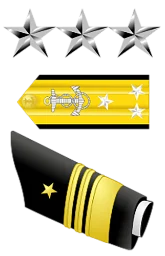
What a vice admiral does
- Commands numbered fleets such as 3rd, 5th, 6th and 7th Fleets
- Commands type commanders and major shore commands
- Serves as deputy chief of naval operations
- Leads major joint staff positions
- Serves as superintendent of the Naval Academy
How to become a vice admiral
Vice admiral is a positional grade: an officer holds it while assigned to a position the President designates as carrying three stars under 10 U.S.C. 601. Candidates are usually two-star admirals, though the law allows others. The Senate must confirm both the appointment and, later, retirement in the grade.
Vice Admiral pay
In 2026, basic pay for O-9 runs from $19,000 – $19,000 a month, rising with years of service. Basic pay is the same in every branch; housing (BAH) and food (BAS) allowances are paid on top. See the full 2026 military pay chart.
History of the rank
Congress created the rank of vice admiral in December 1864 for David Farragut, after his victory at Mobile Bay; most records date his promotion to 21 December 1864.
The insignia is three silver stars, and a two-inch stripe with two half-inch stripes on the sleeves.
After Farragut, the Navy went long stretches with no vice admiral at all. The grade became a regular part of the Navy only in the 20th century, as numbered fleets and large staffs created positions that called for three stars.
Equivalent ranks in other services
| Insignia | Branch | Rank |
|---|---|---|
 | Army | Lieutenant General (LTG) |
 | Marine Corps | Lieutenant General (LtGen) |
 | Air Force | Lieutenant General (Lt Gen) |
| Space Force | Lieutenant General (Lt Gen) |
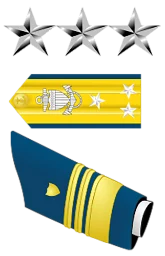 | Coast Guard | Vice Admiral (VADM) |