
How to hold a plank longer
A long plank is trained, not gutted out. Practice strict form in repeated holds below your limit, add time gradually, and strengthen the muscles that give out first.
Last verified November 17, 2026
- Plan length
- 8 weeks
- Sessions per week
- 3
- Working holds
- 50 to 90% of your max
- Used by
- Required on 4 tests, optional on 2
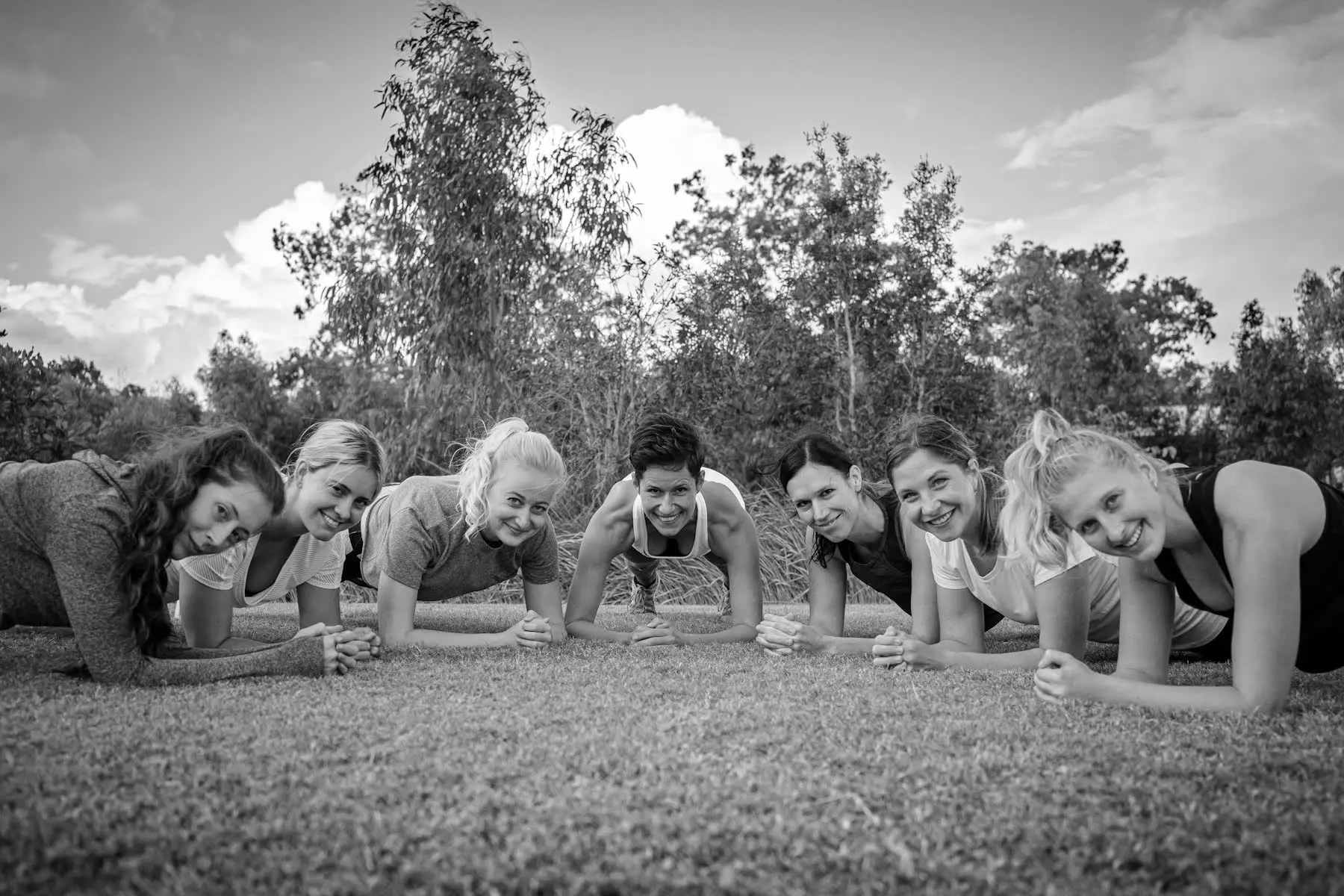
Photo: Unsplash
Which tests use the plank
The forearm plank is now the core event on most U.S. military fitness tests.
- Required event: the Army AFT, Marine Corps PFT, Navy PRT and Coast Guard PFT.
- One of the core options: the Air Force PFRA and Space Force HPA core component.
Each service sets its own minimum and maximum times, and they vary by age and sex and change over time. Take your target from the guide for your test, then train to beat it with a margin.
Test-standard form
The details differ slightly between services, and each service's guide defines the exact position, the faults and how many corrections you get. The general position is the same everywhere.
- Forearms on the ground, elbows directly under your shoulders.
- Feet together or up to about hip width apart, weight on your toes.
- A straight line from head to shoulders to hips to heels.
- Hips level: not sagging toward the ground and not piked up.
- Head neutral, eyes on the ground between your hands.
- Knees straight and off the ground for the whole hold.
Train in the strictest version of this position. Film a hold from the side once a week or have someone watch your hips. What feels straight often is not.
Why planks fail
Knowing what gives out first tells you what to train.
- Hips sag. The abdominals tire and the lower back takes over. This is the most common fault and usually the one that ends a test.
- Shoulders burn. Holding your chest up off your forearms is shoulder work. If your shoulders fail before your trunk, you need more time in the position and more upper-body endurance.
- Hips rise. Piking takes load off the abdominals. It feels like relief and is called as a fault.
- Breath holding. Bracing without breathing spikes effort. You tire sooner and start to shake.
- Loose glutes and legs. Squeezing your glutes and thighs locks the hips in place and shares the load.
- Clock watching. Staring at the timer makes every second longer. Break the hold into chunks instead.
Progression plan
Start with a max hold in strict form and stop the clock at the first form break, not when you collapse. Call that time your max. Every working hold is a percentage of it. With a max of 2:00, 50 percent is 1:00 and 70 percent is 1:24. Train three days a week with a day between.
| Week | Session A | Session B (hard-tension holds) | Session C |
|---|---|---|---|
| 1 | 4 x 50% of max, 60 s rest | 6 x 20 s, 40 s rest | 3 x 60%, 90 s rest |
| 2 | 5 x 50%, 60 s rest | 6 x 20 s, 40 s rest | 3 x 65%, 90 s rest |
| 3 | 4 x 60%, 60 s rest | 8 x 20 s, 40 s rest | 3 x 70%, 2 min rest |
| 4 | Retest max, then 2 x 50% | 6 x 20 s, 40 s rest | Rest |
| 5 | 4 x 60% of new max, 60 s rest | 8 x 25 s, 35 s rest | 3 x 70%, 2 min rest |
| 6 | 5 x 60%, 60 s rest | 8 x 25 s, 35 s rest | 2 x 80%, 3 min rest |
| 7 | 3 x 70%, 90 s rest | 6 x 30 s, 30 s rest | 1 x 90% |
| 8 | 2 x 50%, early in the week | None | Test or retest |
In Session B, hold a normal plank but squeeze everything as hard as you can: fists, glutes, thighs, and pull your elbows toward your toes. Twenty seconds should feel long. These short, tense holds build the stiffness that keeps your hips from sagging late in a test.
You can log your holds and retests in Gruntz and track the plank with your other test events.
Accessory work
Add two or three of these after your plank sets, twice a week. They train the same job from other angles and take about 10 minutes.
- Dead bug: 3 x 8 per side, lower back pressed to the ground.
- Side plank: 3 x 30 seconds per side.
- Hollow hold: 3 x 20 to 30 seconds.
- Body saw: in a plank with feet on a towel or sliders, rock forward and back. 3 x 8.
- Glute bridge: 3 x 12, with a 2-second squeeze at the top.
- Scapular push-ups: 2 x 12, for the shoulders that hold you up.
- Farmer carry: 3 x 40 m with a weight in each hand.
Push-up training also builds the shoulder endurance a long plank needs. See hand-release push-ups, and for the pulling side, how to do more pull-ups.
Test-day tactics
- Set your elbows under your shoulders before the clock starts. A stretched-out position is harder to hold.
- Squeeze your glutes and thighs from the first second, not when it starts to hurt.
- Breathe slowly and steadily behind the brace: in through the nose, out through the mouth.
- Break the hold into 30-second blocks and think only about the current one.
- If you get a correction, fix it at once. Do not argue with it in your head.
- When the shaking starts, re-squeeze your glutes and push your forearms into the ground. Shaking is not a fault.
If the plank comes after other events on your test, practice it tired at least a few times: do a session after push-ups or a run.
This is general training information, not medical advice. Stop and get checked for sharp pain, or for lower back or shoulder pain that persists after training.
Questions
It depends on your test. Minimum and maximum times vary by service, age and sex, and they are revised, so check the guide for your test: Army AFT, Marine Corps PFT, Navy PRT, Coast Guard PFT, Air Force PFRA or Space Force HPA. In training, aim to hold your target time with strict form and some margin.
Three sessions a week with a day between is enough for most people. Planks recover faster than heavy lifting, but daily max holds stall progress. Keep most holds below your limit and test every four weeks.
In general, the event ends when you can no longer hold the required position, for example when your knees, hips or anything other than forearms and toes touch the ground, or when you do not correct a fault after being warned. The exact faults and the number of warnings are defined by each service, so read your test's guide.
It is different. The plank is a sustained hold that tests endurance and position, while sit-ups are repeated movement that leans heavily on the hip flexors. Some people find the plank easier and some find it harder. Either way it responds well to a few weeks of structured practice.
Gruntz is an independent training app built by a former U.S. Marine. It is not affiliated with or endorsed by the U.S. Department of Defense or any military branch.