
Coast Guard PFT: events, timeline and training
The Coast Guard introduced its first service-wide Physical Fitness Test in 2026. It became a requirement on July 1, 2026, after nine months of practice assessments.
Last verified November 17, 2026 · Confirm current standards with your service
- Required since
- July 1, 2026
- Frequency
- Twice a year
- Events
- Push-ups, plank, cardio
- Program
- Physical Readiness Program
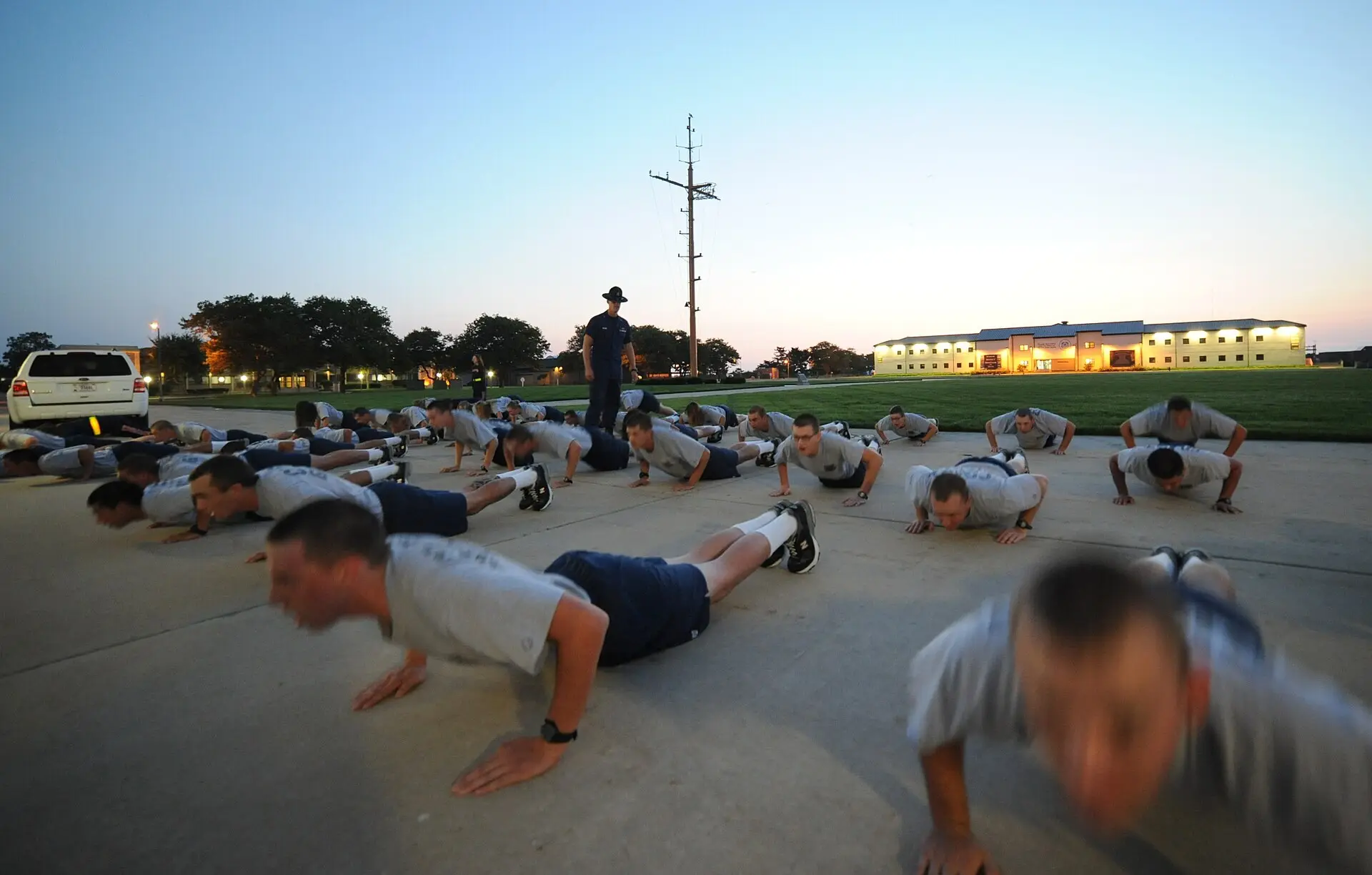
U.S. Coast Guard photo by Chief Warrant Officer Donnie Brzuska. Use does not imply endorsement.
Why there is now a service-wide test
Until 2026 the Coast Guard tested fitness by job, such as boat crews and rescue swimmers, and had no single test for everyone. The Physical Readiness Program changed that. Its instruction, COMDTINST 6100.1, was promulgated in June 2026.
Older pages that describe a Coast Guard test with sit-ups and a sit-and-reach are describing the previous arrangement.
Timeline
- Before July 1, 2026: nine months of assessments with no administrative consequences.
- July 1, 2026: the first mandatory PFT requirement began. Scores are recorded in Direct Access from this date.
- From 2027: results appear on officer evaluations.
- From 2028: results appear on enlisted evaluations.
The PFT is semi-annual. Some communities may replace one of the two with a sex-neutral community fitness test, starting with aviation survival technicians.
The three events
| Event | What you do |
|---|---|
| Push-ups | As many as you can in 1 minute |
| Forearm plank | Hold for time |
| Cardio | A 1.5-mile run, with row and swim alternatives |
Reports of the swim alternative disagree on its format, so confirm the cardio options and their distances with your unit before you train for one.
How it is scored, and where the standards live
Each event is graded on tables normed by age and sex. The score charts are in COMDTINST 6100.1, which is public. For a quick estimate, use the Coast Guard PFT calculator, and confirm the current chart with your unit.
The public announcements are ALCOAST 168/26 and ALCOAST 174/26. They cover the timeline and policy, not the score tables.
How to train for each event
- Push-ups, 1 minute: one minute rewards speed and clean reps more than endurance. Train three times a week with sets of about half your best, and practice a full 60-second effort every week or two.
- Forearm plank: short holds on most days. Follow the plank progression.
- 1.5-mile run: three runs a week: 400 m repeats, a short tempo run and one easy run of 2 to 4 miles. The 2-mile run plan shows how to adapt it to 1.5 miles.
- Row or swim: if you plan to test on an alternative, do most of your cardio in that mode and learn to hold an even pace.
New to structured training, or heading to Cape May? Start with the boot camp workout plan. In Gruntz you can log each PFT event and track the gap to your own target.
This is general training information, not medical advice and not official guidance. Build up gradually, and get sharp or lasting pain checked before you train through it.
Questions
Yes. A service-wide Physical Fitness Test became a requirement on July 1, 2026 under the new Physical Readiness Program.
July 1, 2026. Assessments before that date carried no administrative consequences.
Row and swim alternatives to the 1.5-mile run have been announced. Confirm the exact options and distances with your unit.
Twice a year. Some communities can substitute one with their own community fitness test.
In COMDTINST 6100.1, published on media.defense.gov. The Coast Guard PFT calculator uses those charts for an unofficial estimate.
No. Gruntz records the results you enter and compares them with your own targets. Official scoring comes from the Coast Guard.
Official sources
Standards change. Your command and the official publications above are the authority, not this page.
Gruntz is an independent training app built by a former U.S. Marine. It is not affiliated with or endorsed by the U.S. Department of Defense or any military branch.