
What a major does
- Squadron director of operations or assistant director
- Senior staff officer at wing, numbered air force or major command
- Instructor at Air Force schools or the Academy
- Program element monitor or lead program manager
- Attending intermediate developmental education such as Air Command and Staff College
How to become a major
Promotion to Major is by central selection board. Since 2019 most line officers compete within a developmental category rather than as one large group: Air Operations and Special Warfare, Combat Support, Force Modernization, Information Warfare, Nuclear and Missile Operations, and Cross Functional Operations. Each category gets its own promotion opportunity. Selectees are nominated by the President and confirmed by the Senate.
Major pay
In 2026, basic pay for O-4 runs from $6,295 – $10,510 a month, rising with years of service. Basic pay is the same in every branch; housing (BAH) and food (BAS) allowances are paid on top. See the full 2026 military pay chart.
History of the rank
Oak leaves for majors and lieutenant colonels were adopted by the Army in 1836. When shoulder-strap borders changed in 1851, the major’s leaf became gold and the lieutenant colonel’s silver.
In October 2019 the Air Force split the single Line of the Air Force promotion category, which then covered about 80 percent of officers, into six categories, first used at the March 2020 lieutenant colonel board.
Medal of Honor recipients who held this rank
Airmans who earned the nation’s highest award for valor while serving as a major.
Korean War · 1950
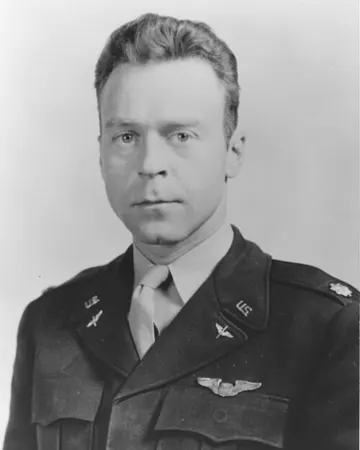
Louis J. Sebille
Major · Posthumous
Sebille's F-51 was badly damaged by antiaircraft fire while attacking enemy troops, artillery and armor threatening friendly ground forces near Hanchang. Rather than bail out or crash-land, he turned back into the guns and dove on the target to his death.
Korean War · 1952
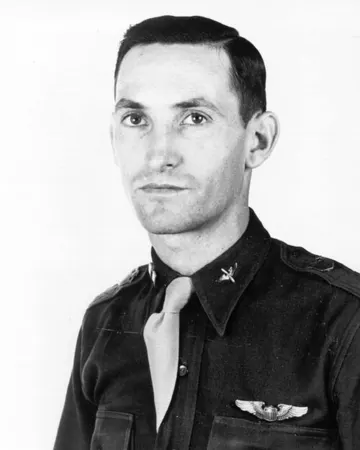
George A. Davis Jr.
Major · Posthumous
Leading only two F-86s near the Yalu River, Davis attacked a formation of about 12 MiG-15s heading for friendly fighter-bombers. He shot down two, then slowed down to go after a third instead of escaping, and was shot down and killed. His attack broke up the enemy formation and let the fighter-bombers finish their mission.
Vietnam War · 1966
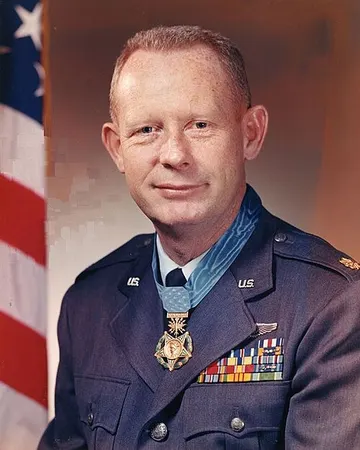
Bernard F. Fisher
Major
During the siege of the Special Forces camp at A Shau, Fisher saw a fellow pilot crash-land on the airstrip. He landed on the debris-covered runway under fire, picked up the downed pilot, and took off again with 19 bullet holes in his aircraft.
Vietnam War · 1967
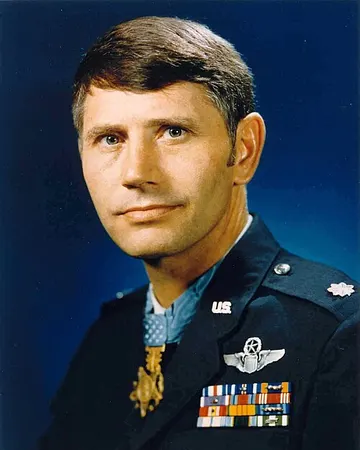
Leo K. Thorsness
Major
On a missile-suppression mission over North Vietnam, Thorsness destroyed two surface-to-air missile sites, then circled to protect his downed wingman's crew and shot down a MiG-17. Low on fuel, he returned alone to drive four more MiGs away from the rescue helicopters. He then landed at a forward base so that another aircraft, even lower on fuel, could use the tanker.
Vietnam War · 1967
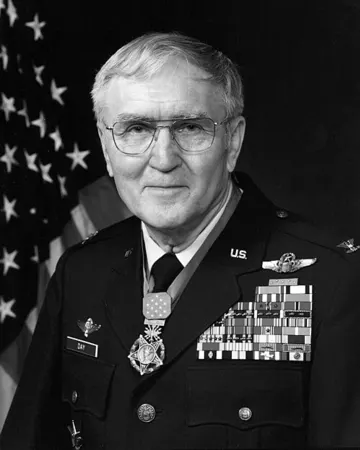
George E. "Bud" Day
Major
Shot down over North Vietnam with a badly broken arm, Day was captured and tortured, then escaped and made his way south on foot, eating berries and raw frogs. He crossed the Ben Hai River into the demilitarized zone before being shot and recaptured. Back in prison he kept resisting, which helped protect aviators still flying against the enemy.
Equivalent ranks in other services
| Insignia | Branch | Rank |
|---|---|---|
 | Army | Major (MAJ) |
 | Marine Corps | Major (Maj) |
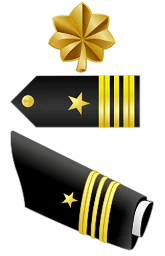 | Navy | Lieutenant Commander (LCDR) |
 | Space Force | Major (Maj) |
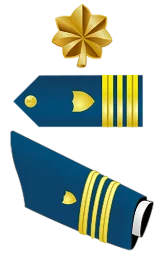 | Coast Guard | Lieutenant Commander (LCDR) |