

What a major does
- Battalion executive officer or operations officer (S3)
- Primary staff officer at brigade, such as S2 intelligence or S4 logistics
- Planner on a division or corps staff
- Instructor at the Command and General Staff College or a branch school
- Joint staff officer at a combatant command
How to become a major
Promotion to MAJ is competitive and decided by a Department of the Army selection board. Federal law requires at least three years as a Captain before consideration. Defense Department guidance has aimed to promote officers to O-4 at about ten years of service, with a selection opportunity of about 80 percent. Majors complete Intermediate Level Education, such as the Command and General Staff Officer Course.
Major pay
In 2026, basic pay for O-4 runs from $6,295 – $10,510 a month, rising with years of service. Basic pay is the same in every branch; housing (BAH) and food (BAS) allowances are paid on top. See the full 2026 military pay chart.
History of the rank
Field officers were first marked in 1775 by red or pink hat cockades. The leaf was introduced in the General Regulations of 1835 for both lieutenant colonels and majors, in gold or silver depending on the strap border, so both grades wore both colors for a time.
In 1851 all strap borders became gold, so the major's leaf became gold and the lieutenant colonel's silver. When epaulettes were abolished in 1872, the major's gold leaf moved to the dress uniform to tell majors from second lieutenants. A 1912 regulation first specified that the leaf was an oak leaf.
Medal of Honor recipients who held this rank
Soldiers who earned the nation’s highest award for valor while serving as a major.
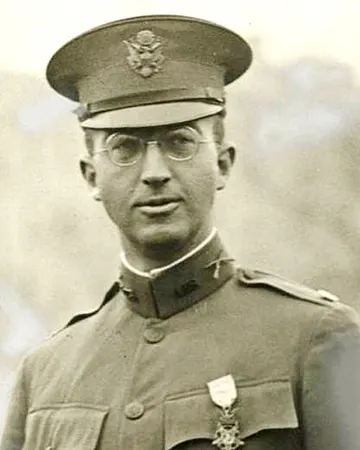
World War I · 1918
Charles W. Whittlesey
Major
Whittlesey's command was cut off from its division for five days in the Argonne Forest. Surrounded by a larger force, he held the position he had been ordered to take and kept his men together.
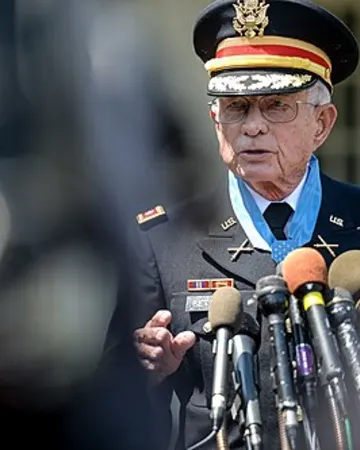
Vietnam War · 1967
Charles S. Kettles
Major
Near Duc Pho, Kettles flew helicopters into heavy fire to bring in reinforcements and evacuate the wounded of an airborne unit. When he learned eight soldiers had been left behind, he flew back to the landing zone with no supporting fire and brought them out.
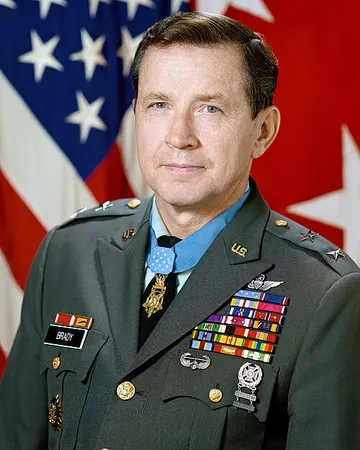
Vietnam War · 1968
Patrick H. Brady
Major
Brady flew a medical evacuation helicopter through thick fog and heavy fire to reach wounded soldiers in enemy-held ground. Over the course of the day he used three helicopters and flew out 51 seriously wounded men.
Equivalent ranks in other services
| Insignia | Branch | Rank |
|---|---|---|
 | Marine Corps | Major (Maj) |
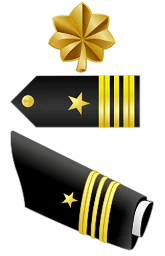 | Navy | Lieutenant Commander (LCDR) |
 | Air Force | Major (Maj) |
| Space Force | Major (Maj) |
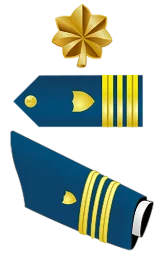 | Coast Guard | Lieutenant Commander (LCDR) |