
What a captain does
- Aircraft commander, instructor or evaluator in flying units
- Flight commander leading a large team of Airmen
- Program manager or engineer in acquisition
- Staff officer at wing or headquarters level
- Completing Squadron Officer School
How to become a captain
First Lieutenants who remain fully qualified are promoted to Captain after a set period, roughly four years of commissioned service. Promotion past Captain is competitive by central board.
Captain pay
In 2026, basic pay for O-3 runs from $5,534 – $9,004 a month, rising with years of service. Basic pay is the same in every branch; housing (BAH) and food (BAS) allowances are paid on top. See the full 2026 military pay chart.
History of the rank
Two bars for Captain were adopted with Army shoulder straps in 1836. Like the First Lieutenant’s bar, they changed from gold to silver in 1872.
The Air Force retained the insignia in 1947, and it is shared today with the Army, Marine Corps and Space Force.
Captains usually learn which developmental category they will compete in at their first board. Pilots, combat systems officers, air battle managers and remotely piloted aircraft pilots fall under Air Operations and Special Warfare; cyber, intelligence, weather and public affairs officers under Information Warfare; engineers and acquisition managers under Force Modernization.
Medal of Honor recipients who held this rank
Airmans who earned the nation’s highest award for valor while serving as a captain.
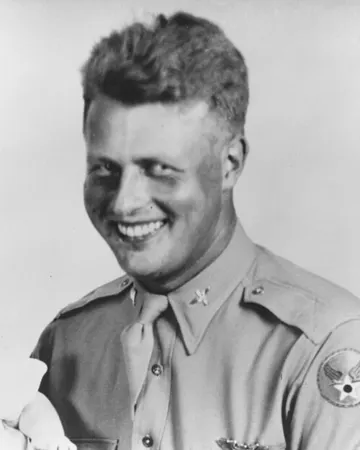
Korean War · 1951
John S. Walmsley Jr.
Captain · Posthumous
Flying a B-26 at night over Korea, Walmsley disabled a high-priority enemy supply train and, out of ammunition, used his aircraft's searchlight to guide another bomber onto it. He flew low down the valley with the light on, drawing heavy antiaircraft fire, so the other crew could see the target. The train was destroyed, and Walmsley's plane was hit and crashed into the mountains.
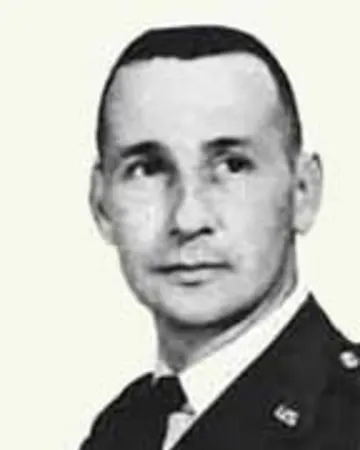
Vietnam War · 1967
Hilliard A. Wilbanks
Captain · Posthumous
Wilbanks was a forward air controller in an unarmed light plane when he found an enemy force waiting to ambush a South Vietnamese Ranger battalion near Dalat. With no strike aircraft able to arrive in time, he made repeated treetop passes over the enemy, firing a rifle out of his side window to draw their fire away from the Rangers. The Rangers got clear, and Wilbanks was mortally wounded on his final pass.
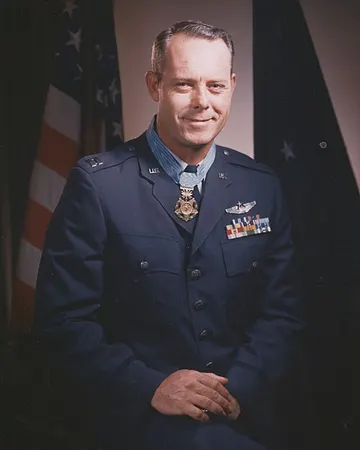
Vietnam War · 1967
Gerald O. Young
Captain
Young commanded a rescue helicopter on a night mission to save an Army reconnaissance team near Khe Sanh after two helicopters had already been lost. He hovered under heavy fire until the last survivors were aboard; his aircraft was then shot down and burned. Badly burned, he helped a wounded man, led the enemy away, and refused rescue for 17 hours because the enemy was setting a trap for rescue aircraft.
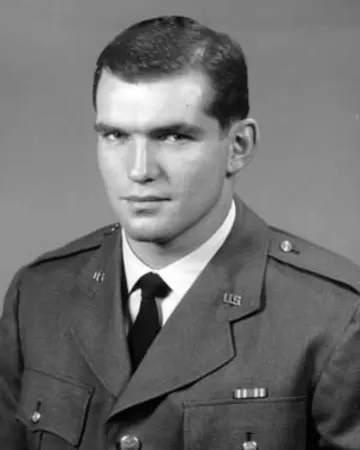
Vietnam War · 1967
Lance P. Sijan
Captain · Posthumous
After ejecting over North Vietnam, Sijan evaded capture for more than six weeks while badly injured and starving. Once captured, he overpowered a guard and crawled into the jungle before being taken again. Tortured in prison, he gave his captors no information and spoke of escape until he died.
Vietnam War · 1972
Steven L. Bennett
Captain · Posthumous
With no air or artillery support available, Bennett strafed an enemy force massing to attack friendly troops until a missile badly damaged his aircraft. His observer's parachute had been shredded, so instead of ejecting, Bennett chose to ditch in the Gulf of Tonkin, a landing no pilot of that aircraft type had survived. The observer escaped and was rescued; Bennett was trapped and killed.
Equivalent ranks in other services
| Insignia | Branch | Rank |
|---|---|---|
 | Army | Captain (CPT) |
 | Marine Corps | Captain (Capt) |
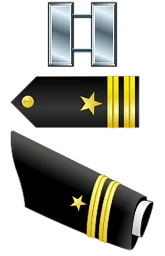 | Navy | Lieutenant (LT) |
 | Space Force | Captain (Capt) |
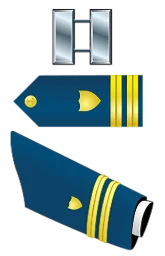 | Coast Guard | Lieutenant (LT) |