

What a captain does
- Company or battery commander
- Pilot or flight officer and division lead in a squadron
- Battalion or squadron staff officer in operations, intelligence or logistics
- Instructor at The Basic School, Officer Candidates School or a recruiting station
- Series or company commander at a recruit depot
How to become a captain
Promotion to Captain is by a selection board convened under the authority of the Secretary of the Navy. Under federal law a first lieutenant cannot be promoted until completing two years in grade. Captains are expected to complete the career-level professional military education for their grade: the resident Expeditionary Warfare School at Marine Corps University, or its distance or blended seminar version, which counts the same for promotion.
Captain pay
In 2026, basic pay for O-3 runs from $5,534 – $9,004 a month, rising with years of service. Basic pay is the same in every branch; housing (BAH) and food (BAS) allowances are paid on top. See the full 2026 military pay chart.
History of the rank
Two bars for captains were established in 1836 in the Army system that Marine insignia follow. The bars were gold or silver depending on the strap border, and from 1872 they have been silver.
Captains have led Marines since the Revolution. Samuel Nicholas, the first commissioned officer of the Continental Marines, was made a captain in November 1775 and raised the first Marine companies.
Medal of Honor recipients who held this rank
Marines who earned the nation’s highest award for valor while serving as a captain.
World War II · 1942
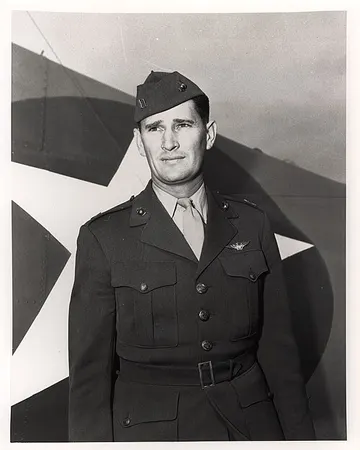
Joseph J. Foss
Captain
Flying with Marine Fighting Squadron 121 at Guadalcanal, Captain Foss shot down 23 Japanese aircraft between October and November 1942, and three more in January 1943, while also leading many escort missions. He later led a small mixed flight against a much larger enemy force and broke up its attack.
World War II · 1944
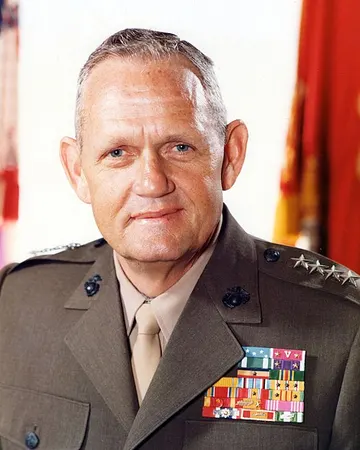
Louis H. Wilson Jr.
Captain
At Fonte Hill on Guam, Captain Wilson led his company 300 yards up open ground under heavy fire to take its objective, then took charge of other scattered units and set the night defense despite being wounded three times. He then held the position through a series of savage enemy counterattacks.
Korean War · 1950
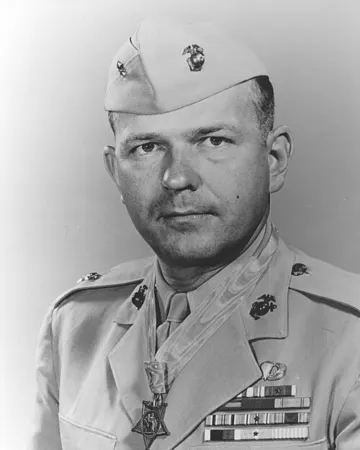
William E. Barber
Captain
Captain Barber's Fox Company was ordered to hold a three-mile mountain pass on the only route between Yudam-ni and Hagaru-ri near the Chosin Reservoir. Surrounded by a regiment-sized force after the first night, he asked to stand fast if supplied by air rather than withdraw, and held the pass from 28 November to 2 December 1950.
Korean War · 1950
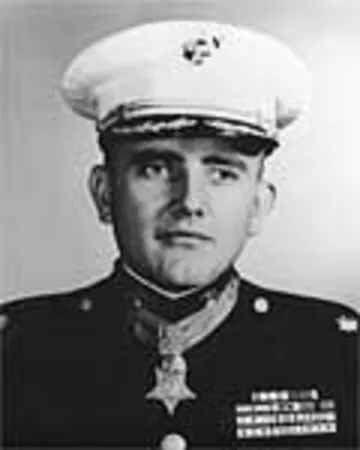
Carl L. Sitter
Captain
Captain Sitter fought his company through enemy-held ground to reinforce his battalion at Hagaru-ri, taking 25 percent casualties on the way. The next morning he led his depleted men up a frozen hill held by a regiment-sized force that overlooked the whole valley and the route of withdrawing Marines.
Vietnam War · 1968
James E. Livingston
Captain
At Dai Do, Captain Livingston led Company E across 500 meters of open rice paddy under heavy fire to attack the fortified village, which the enemy had seized the evening before, cutting off another Marine company. He moved to wherever resistance was heaviest, encouraging his Marines and adjusting supporting fire.
Equivalent ranks in other services
| Insignia | Branch | Rank |
|---|---|---|
 | Army | Captain (CPT) |
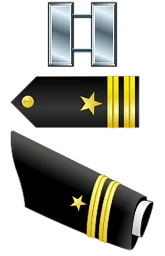 | Navy | Lieutenant (LT) |
 | Air Force | Captain (Capt) |
| Space Force | Captain (Capt) |
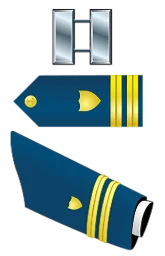 | Coast Guard | Lieutenant (LT) |