
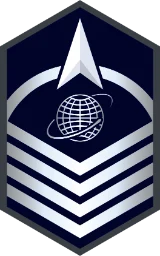
What a master sergeant does
- Squadron senior enlisted leader or operations superintendent
- Flight chief over several crews
- First sergeant
- Managing training programs and manning for a squadron
- Advising commanders on the enlisted force
How to become a master sergeant
Technical Sergeants compete for Master Sergeant at a central board. In the 2026 cycle, 196 of 530 eligible (36.98 percent) were selected, with an average of 4.50 years in grade and 12.99 years in service.
Master Sergeant pay
In 2026, basic pay for E-7 runs from $3,932 – $7,067 a month, rising with years of service. Basic pay is the same in every branch; housing (BAH) and food (BAS) allowances are paid on top. See the full 2026 military pay chart.
History of the rank
The Space Force was established on Dec. 20, 2019, and at first used Air Force enlisted titles. On Jan. 29, 2021, the service announced its own rank names, effective Feb. 1, 2021, after collecting crowdsourced feedback from the field. The four junior grades became Specialist 1 through Specialist 4, and E-5 became Sergeant; grades from Technical Sergeant up kept their Air Force titles.
Master Sergeant kept its Air Force title in 2021. The Space Force’s Core Enlisted Framework describes E-7 as the start of operational leadership, after the team leadership years as a Sergeant and Technical Sergeant. Guardians kept wearing Air Force insignia while the service designed its own. The Space Force unveiled its enlisted rank insignia on Sept. 20, 2021, and authorized them as an optional uniform item in Space Force Guidance Memorandum 2022-36-01, announced on May 24, 2022, as an outcome of the service’s first uniform board in 2021.
Equivalent ranks in other services
| Insignia | Branch | Rank |
|---|---|---|
 | Army | Sergeant First Class (SFC) |
 | Marine Corps | Gunnery Sergeant (GySgt) |
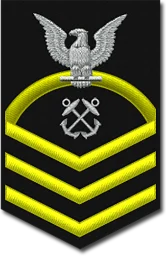 | Navy | Chief Petty Officer (CPO) |
 | Air Force | Master Sergeant (MSgt) |
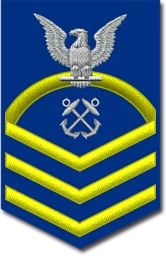 | Coast Guard | Chief Petty Officer (CPO) |