
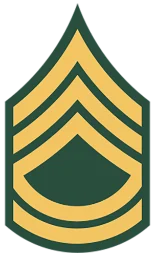
What a sergeant first class does
- Platoon sergeant for a platoon of roughly 16 to 44 Soldiers
- Senior NCO in a battalion or brigade staff section
- Instructor, drill sergeant leader or observer-coach-trainer
- Mentors a new lieutenant platoon leader
- Manages platoon training plans, maintenance and accountability
How to become a sergeant first class
Promotion to SFC is centralized. Each year a Department of the Army board reviews the records of eligible Staff Sergeants, scoring performance evaluations, assignments and schooling. Selected Soldiers receive a sequence number and pin on as vacancies open. HQDA announces the time-in-service and time-in-grade zones for each year's board, and graduation from the Advanced Leader Course is required before pin-on. The Senior Leader Course comes next, as the requirement for Master Sergeant.
Sergeant First Class pay
In 2026, basic pay for E-7 runs from $3,932 – $7,067 a month, rising with years of service. Basic pay is the same in every branch; housing (BAH) and food (BAS) allowances are paid on top. See the full 2026 military pay chart.
History of the rank
A 'sergeant first class' title was used in the Army in the late 1800s and dropped in 1920. The Army revived it in 1948 in place of technical sergeant, and under the numbered pay grades of the early 1950s it was E-6. When Congress added E-8 and E-9 in 1958, Sergeant First Class moved up to E-7 with three chevrons over two arcs.
The E-7 had been the senior enlisted grade before 1958, called Master Sergeant. The 1958 change created the room for today's senior NCO ladder above SFC.
Medal of Honor recipients who held this rank
Soldiers who earned the nation’s highest award for valor while serving as a sergeant first class.
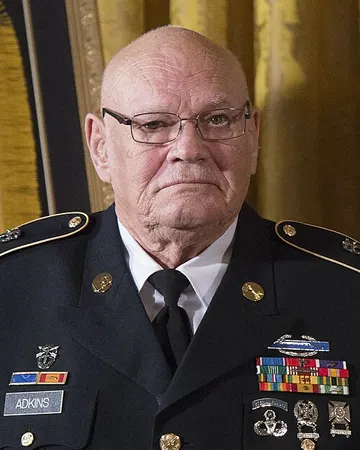
Vietnam War · 1966
Bennie G. Adkins
Sergeant First Class
During a 38-hour battle at Camp A Shau, Adkins ran through heavy fire to man a mortar, carried wounded soldiers to safety and held off repeated attacks, suffering 18 wounds. After the last helicopter had left, he led a small group through 48 hours of evading the enemy until they were rescued.
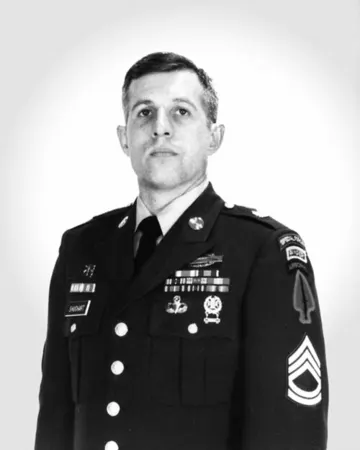
Somalia · 1993
Randall D. Shughart
Sergeant First Class · Posthumous
In Mogadishu, Shughart and Master Sergeant Gary Gordon volunteered to be put on the ground to protect four critically wounded crew members at a downed helicopter, knowing enemy fighters were closing in. They held off the attackers until they were killed, and the pilot survived.
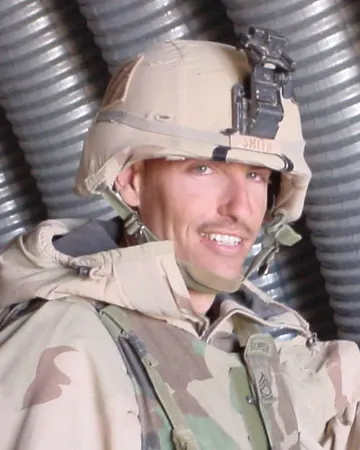
Operation Iraqi Freedom · 2003
Paul R. Smith
Sergeant First Class · Posthumous
In Iraq, a company-sized enemy force attacked his task force while it built a holding area for prisoners. With over 100 soldiers at risk, Smith organized a defense, then manned a .50-caliber machine gun on a damaged armored vehicle and kept firing from that exposed position until he was mortally wounded.
Operation Iraqi Freedom · 2005
Alwyn C. Cashe
Sergeant First Class · Posthumous
When a roadside bomb set his Bradley on fire in Iraq, Cashe pulled out the driver, and his fuel-soaked uniform caught fire. Badly burned, he went back to the burning vehicle and helped four more of his soldiers escape.
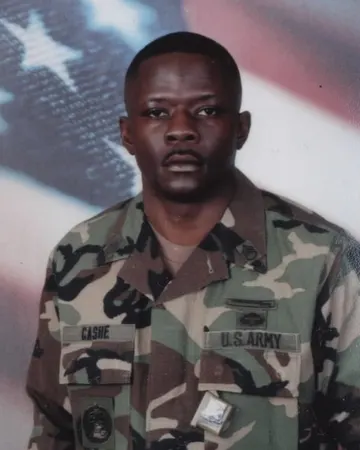
Operation Inherent Resolve · 2015
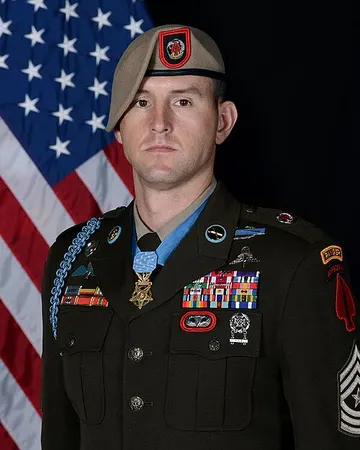
Thomas P. Payne
Sergeant First Class
During a hostage rescue raid near Hawija, Iraq, Payne led his team through one building and freed 38 hostages. He then went into a second, burning building under fire with bolt cutters, cutting the locks and going back in until 37 more hostages were freed.
Equivalent ranks in other services
| Insignia | Branch | Rank |
|---|---|---|
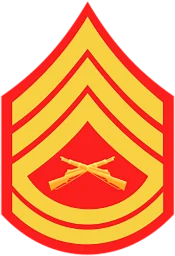 | Marine Corps | Gunnery Sergeant (GySgt) |
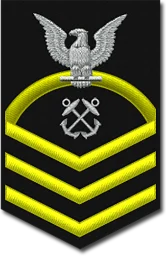 | Navy | Chief Petty Officer (CPO) |
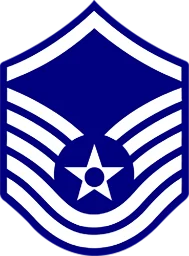 | Air Force | Master Sergeant (MSgt) |
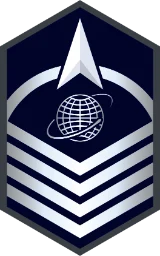 | Space Force | Master Sergeant (MSgt) |
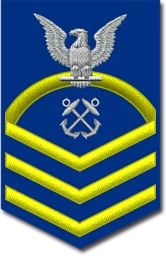 | Coast Guard | Chief Petty Officer (CPO) |