
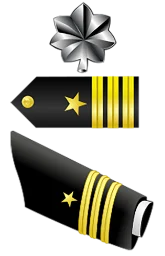
What a commander does
- Commands a destroyer, submarine, aviation squadron or shore command
- Serves as executive officer of a large ship such as a carrier or amphibious assault ship
- Leads divisions on fleet, Navy headquarters and joint staffs
- Serves as a senior instructor or program manager
- Represents the Navy in joint and interagency billets
How to become a commander
Selection to Commander is by statutory board under Title 10, and it is more competitive than O-4: the board compares lieutenant commanders' fitness reports, department head and executive officer performance, and joint and education credit. Officers are also screened for command by separate boards, so making commander and getting a command are two different steps. Selections are confirmed by the Senate.
Commander pay
In 2026, basic pay for O-5 runs from $7,295 – $12,395 a month, rising with years of service. Basic pay is the same in every branch; housing (BAH) and food (BAS) allowances are paid on top. See the full 2026 military pay chart.
History of the rank
The rank grew out of the British "master and commander" and was used in the U.S. Navy as master commandant before it was renamed commander in 1838.
U.S. Navy commanders began wearing silver oak leaves in 1862. Three half-inch gold stripes on the sleeves and shoulder boards mark the rank.
A commander in command of a ship is addressed as "Captain" aboard, by long custom, because the person in command of a ship is its captain regardless of rank. Commanders leading squadrons or shore units are more often called "Skipper."
Medal of Honor recipients who held this rank
Sailors who earned the nation’s highest award for valor while serving as a commander.
World War II · 1943
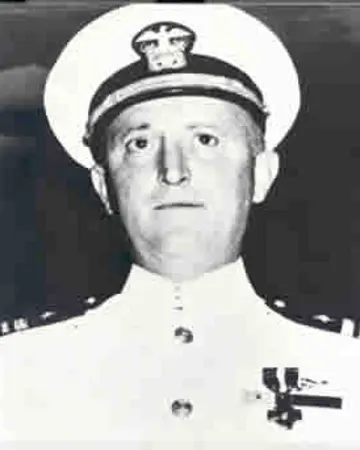
Howard W. Gilmore
Commander · Posthumous
Gilmore commanded the submarine USS Growler when an enemy gunboat tried to ram her at night; he rammed it instead. Under heavy machine-gun fire, he cleared the bridge, sent his men below first, and was cut down by the gunfire. His last order was to take the boat down, and the crew brought the damaged Growler home.
World War II · 1944
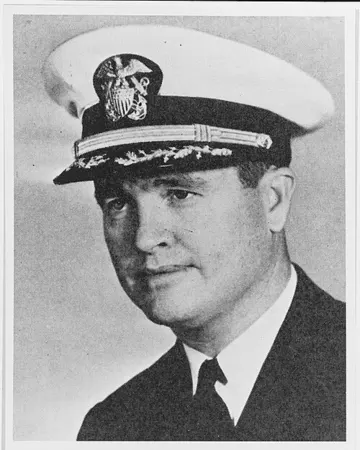
Samuel D. Dealey
Commander · Posthumous
As commander of USS Harder on her fifth war patrol, Dealey sank five Japanese destroyers in five close-range torpedo attacks, including "down-the-throat" shots at ships charging straight at him. He operated within sight of a major Japanese fleet base off Tawi Tawi.
World War II · 1944
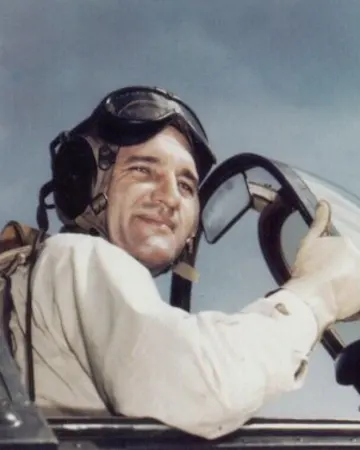
David McCampbell
Commander
McCampbell commanded Air Group 15 from USS Essex. On 19 June 1944 he shot down seven enemy planes attacking the fleet, and on 24 October, with a single wingman, he took on a formation of about 60 aircraft, shot down nine, and broke up the attack before any reached the fleet.
World War II · 1944
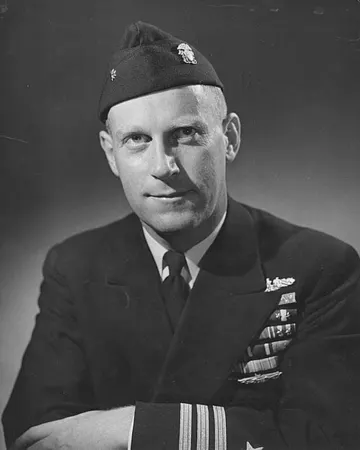
Richard H. O'Kane
Commander
On USS Tang's last war patrol, O'Kane drove his submarine on the surface into the middle of two heavily escorted convoys on back-to-back nights and sank ship after ship at close range. He fired his last torpedoes into what remained of the convoy before Tang herself went down.
World War II · 1945
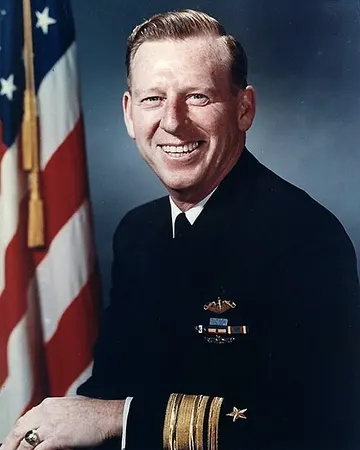
Eugene B. Fluckey
Commander
Commanding USS Barb off the China coast, Fluckey tracked down more than 30 enemy ships sheltering in Namkwan Harbor in January 1945. He took his submarine into shallow, mined and uncharted water, fired his last forward torpedoes and four more from the stern into the anchored ships, and then ran out at full speed to safety.
Equivalent ranks in other services
| Insignia | Branch | Rank |
|---|---|---|
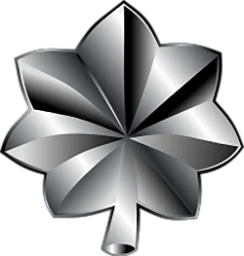 | Army | Lieutenant Colonel (LTC) |
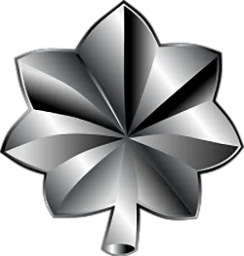 | Marine Corps | Lieutenant Colonel (LtCol) |
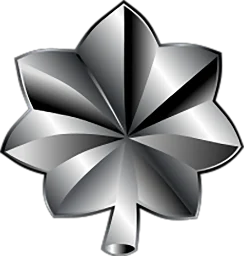 | Air Force | Lieutenant Colonel (Lt Col) |
| Space Force | Lieutenant Colonel (Lt Col) |
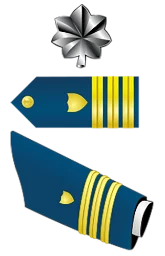 | Coast Guard | Commander (CDR) |