
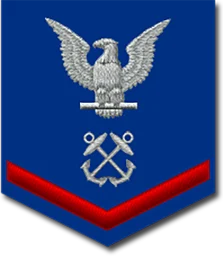
What a petty officer third class does
- Performs rating work: boat operations, engineering, aviation maintenance, administrative or law enforcement duties
- Qualifies as boat crew, coxswain trainee or boarding team member
- Supervises small teams of non-rated members
- Trains junior members in the rating
- Completes the requirements to compete for E-5
How to become a petty officer third class
To advance to E-5, a PO3 must meet time in grade, finish rating performance qualifications and required courses, earn a "Ready" advancement recommendation from the commanding officer and take the servicewide exam (SWE). Candidates are ranked by a final multiple that combines the exam score with performance marks, service time, awards and other factors. Since May 2022 active-duty members compete through a single exam each May.
Petty Officer Third Class pay
In 2026, basic pay for E-4 runs from $3,142 – $3,815 a month, rising with years of service. Basic pay is the same in every branch; housing (BAH) and food (BAS) allowances are paid on top. See the full 2026 military pay chart.
History of the rank
Coast Guard petty officer classes follow the Navy pattern, which the Coast Guard adopted with the rest of the Navy rate structure in 1920.
The rating badge shows a perched eagle above the rating mark and one chevron, the same layout the Navy uses.
The move to one annual servicewide exam in May 2022 ended the separate November exam for petty officers competing for E-5 and E-6; the chief and senior chief exams were already given once a year.
Equivalent ranks in other services
| Insignia | Branch | Rank |
|---|---|---|
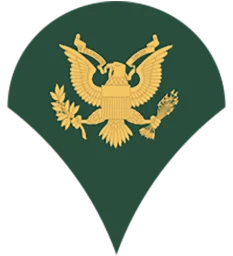 | Army | Specialist (SPC) |
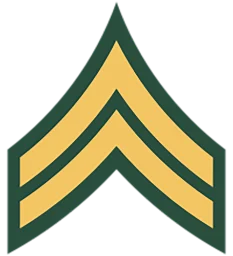 | Army | Corporal (CPL) |
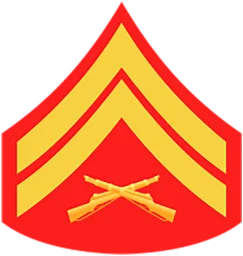 | Marine Corps | Corporal (Cpl) |
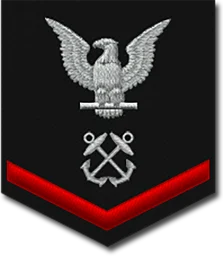 | Navy | Petty Officer Third Class (PO3) |
 | Air Force | Senior Airman (SrA) |
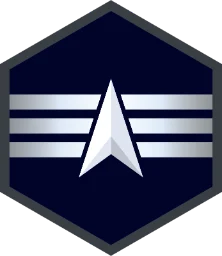 | Space Force | Specialist 4 (Spc4) |