
What a chief warrant officer 3 does
- Runs a technical department or program at a major cutter, air station, base or training center
- Serves on district, area or headquarters staffs as the subject-matter expert for a specialty
- Leads or serves as second in command of units where the billet is coded for a warrant officer
- Inspects, assesses and certifies programs such as engineering, ordnance or boat forces at other units
- Mentors CWO2s and the chiefs who are preparing to apply for warrant
How to become a chief warrant officer 3
Promotion from CWO2 to CWO3 is by a selection board convened under Title 14. The board reads officer evaluation reports and selects against the number of openings in each specialty. Coast Guard warrant officers serve under the same promotion and retirement framework as other Coast Guard officers, adjusted for warrant grades.
Chief Warrant Officer 3 pay
In 2026, basic pay for W-3 runs from $5,223 – $9,163 a month, rising with years of service. Basic pay is the same in every branch; housing (BAH) and food (BAS) allowances are paid on top. See the full 2026 military pay chart.
History of the rank
The W-3 grade is part of the numbered warrant structure the Coast Guard shares with the Navy, with the same titles, pay grades and collar bars.
A CWO3 wears a silver bar with blue enamel breaks; on sleeves and shoulder boards the Coast Guard shield sits between the rank stripe and the specialty mark.
Coast Guard warrant specialties have grown with the service's missions. Alongside boatswain and naval engineering, recent appointment boards have selected warrants in fields such as criminal investigation, diving, intelligence systems, maritime law enforcement and information systems.
Equivalent ranks in other services
| Insignia | Branch | Rank |
|---|---|---|
 | Army | Chief Warrant Officer 3 (CW3) |
 | Marine Corps | Chief Warrant Officer 3 (CWO3) |
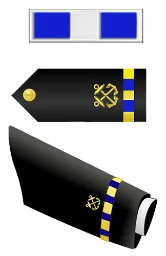 | Navy | Chief Warrant Officer 3 (CWO3) |
| Air Force | Chief Warrant Officer 3 (CWO3) |