
What a chief warrant officer 3 does
- Senior technical advisor at group, wing or higher level
- Leading complex cyber or IT projects across several units
- Setting technical standards and procedures for the specialty
- Mentoring junior warrant officers
- Linking operational units with acquisition and engineering staffs
How to become a chief warrant officer 3
Promotion to W-3 follows Air Force warrant officer guidance. Because the corps restarted in 2024, the first classes are still building the time in grade needed to compete. Experienced warrant officers can also join from another service, as the Air Force’s first active-duty CW5 did in January 2026.
Chief Warrant Officer 3 pay
In 2026, basic pay for W-3 runs from $5,223 – $9,163 a month, rising with years of service. Basic pay is the same in every branch; housing (BAH) and food (BAS) allowances are paid on top. See the full 2026 military pay chart.
History of the rank
Warrant grades above W-2 were part of Air Force structure in its early years, before appointments stopped in 1959.
The 2024 reintroduction authorized the full W-1 to W-5 range, with the first graduates entering the force in early 2025.
Air Force warrant officers in the 17W and 17Y specialties are meant to stay technical throughout their careers. At W-3, the expectation is broader influence: designing how systems are used across several units rather than running a single team.
Equivalent ranks in other services
| Insignia | Branch | Rank |
|---|---|---|
 | Army | Chief Warrant Officer 3 (CW3) |
 | Marine Corps | Chief Warrant Officer 3 (CWO3) |
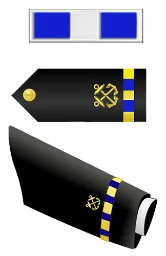 | Navy | Chief Warrant Officer 3 (CWO3) |
| Coast Guard | Chief Warrant Officer 3 (CWO3) |