
What a captain does
- Commands a sector, usually with authority as Captain of the Port for a region's waterways
- Commands a National Security Cutter or another of the service's largest cutters
- Commands major training centers, bases and air stations
- Serves as chief of staff to a district or area commander
- Leads major offices at Coast Guard headquarters
How to become a captain
Captains compete for selection to Rear Admiral (lower half), the first flag rank, before a board. Selectees are nominated by the President and confirmed by the Senate. Only a small share of captains are selected because the number of Coast Guard flag officers is capped by law.
Captain pay
In 2026, basic pay for O-6 runs from $8,751 – $15,408 a month, rising with years of service. Basic pay is the same in every branch; housing (BAH) and food (BAS) allowances are paid on top. See the full 2026 military pay chart.
History of the rank
The Revenue Cutter Service used the title captain for its senior officers from 1799, and the Coast Guard kept it as an O-6 rank when it adopted Navy titles in 1920.
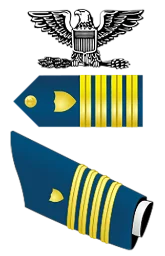
The insignia is a silver eagle on the collar and four half-inch gold stripes on the sleeves, with the Coast Guard shield.
The Captain of the Port title, usually held by sector commanders, began in World War I, when the Commandant named senior officers in New York, Philadelphia, Norfolk and Sault Ste. Marie to enforce the 1917 Espionage Act's port security rules.
Equivalent ranks in other services
| Insignia | Branch | Rank |
|---|---|---|
 | Army | Colonel (COL) |
 | Marine Corps | Colonel (Col) |
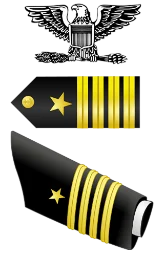 | Navy | Captain (CAPT) |
 | Air Force | Colonel (Col) |
| Space Force | Colonel (Col) |