

What a specialist 2 does
- Finishing technical training or starting at a first duty station
- Learning the systems and procedures of a unit, such as a satellite operations or cyber squadron
- Completing on-the-job qualification under a trainer
- Supporting crew or shift operations under supervision
- Taking part in unit readiness and training events
How to become a specialist 2
Promotion from Specialist 1 to Specialist 2 is non-competitive and follows time in grade while in good standing. (The Air Force’s matching step, Airman Basic to Airman, takes six months.)
Specialist 2 pay
In 2026, basic pay for E-2 runs from $2,698 – $2,698 a month, rising with years of service. Basic pay is the same in every branch; housing (BAH) and food (BAS) allowances are paid on top. See the full 2026 military pay chart.
History of the rank
The Space Force was established on Dec. 20, 2019, and at first used Air Force enlisted titles. On Jan. 29, 2021, the service announced its own rank names, effective Feb. 1, 2021, after collecting crowdsourced feedback from the field. The four junior grades became Specialist 1 through Specialist 4, and E-5 became Sergeant; grades from Technical Sergeant up kept their Air Force titles.
Before Feb. 1, 2021, this grade was Airman (E-2), the Air Force title. Guardians kept wearing Air Force insignia while the service designed its own. The Space Force unveiled its enlisted rank insignia on Sept. 20, 2021, and authorized them as an optional uniform item in Space Force Guidance Memorandum 2022-36-01, announced on May 24, 2022, as an outcome of the service’s first uniform board in 2021.
Equivalent ranks in other services
| Insignia | Branch | Rank |
|---|---|---|
 | Army | Private (PV2) |
 | Marine Corps | Private First Class (PFC) |
 | Navy | Seaman Apprentice (SA) |
 | Air Force | Airman (Amn) |
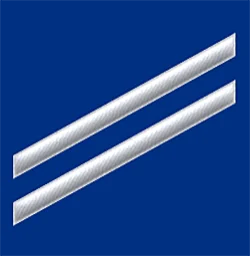 | Coast Guard | Seaman Apprentice (SA) |