

What a private first class does
- Rifleman, machine gunner, mortarman or support Marine in a fire team or section
- Student or new graduate of an MOS school
- Performs duties under the direction of lance corporals and NCOs
- Maintains personal weapon and gear to inspection standard
- Builds proficiency for promotion to lance corporal
How to become a private first class
Promotion to PFC is by the commander, not a board. The Marine needs six months in grade and six months of service, measured from the first day of the month the Marine entered active duty, and the commander must find the Marine's performance satisfactory. Reserve privates follow the same six-month rule from the start of initial active duty for training. Some Marines enter at this grade through their enlistment contract.
Private First Class pay
In 2026, basic pay for E-2 runs from $2,698 – $2,698 a month, rising with years of service. Basic pay is the same in every branch; housing (BAH) and food (BAS) allowances are paid on top. See the full 2026 military pay chart.
History of the rank
The Marine Corps added private first class around the end of World War I to match the Army rank of the same name; sources differ on whether the change came in 1917 or 1918. It sits at E-2 in the Marine Corps, one grade lower than the Army PFC, because the Marine Corps keeps lance corporal as a separate E-3 rank.
The single chevron is worn on the uniform sleeves of service and dress coats and as a pin-on on the collar of the utility uniform, placed as the Marine Corps Uniform Regulations prescribe.
Medal of Honor recipients who held this rank
Marines who earned the nation’s highest award for valor while serving as a private first class.
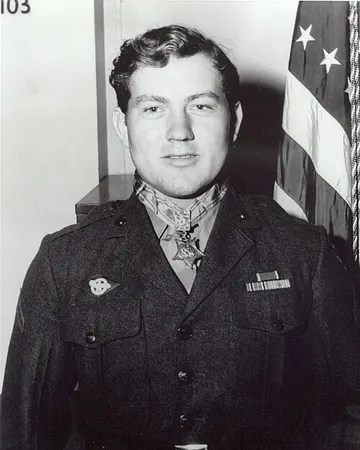
World War II · 1945
Jacklyn H. Lucas
Private First Class
On the second day of the Iwo Jima landing, Private First Class Lucas and three other Marines were ambushed in a ravine and two grenades landed in front of them. He threw himself on one and pulled the other beneath him, taking both blasts to shield his companions, who then drove off the enemy patrol. He survived his wounds.
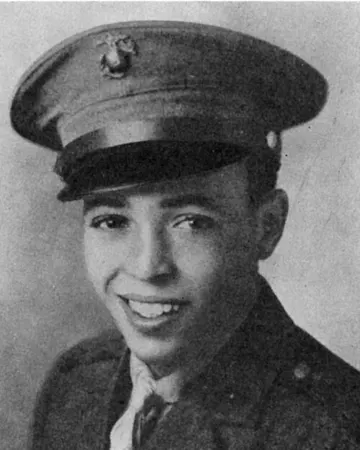
World War II · 1945
Harold Gonsalves
Private First Class · Posthumous
Serving as acting scout sergeant with an artillery forward observation team on Okinawa, Private First Class Gonsalves moved up to the front lines with his commanding officer under heavy fire. When a Japanese grenade landed among the group, he dove on it and took the full blast, protecting the officer and another Marine at the cost of his life.
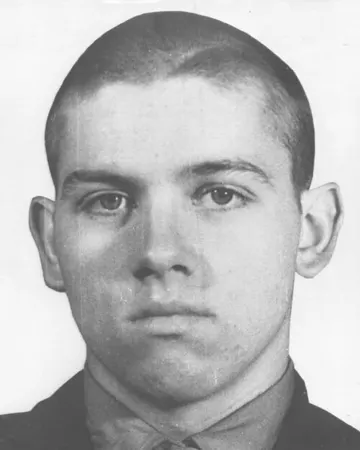
Korean War · 1950
William B. Baugh
Private First Class · Posthumous
During a night ambush of a motorized column on the road from Koto-ri to Hagaru-ri, a grenade landed in the truck carrying Private First Class Baugh and his antitank squad. He shouted a warning and threw himself on it, saving the men around him, and died of his wounds a short time later.
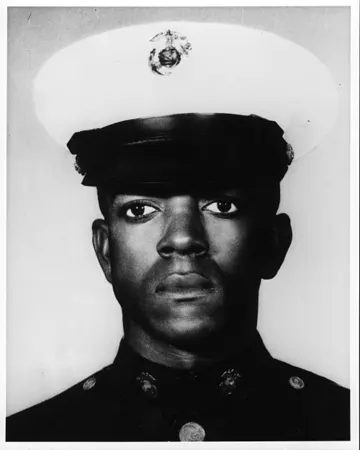
Vietnam War · 1967
James Anderson Jr.
Private First Class · Posthumous
Northwest of Cam Lo, Private First Class Anderson's platoon was pinned down just 20 meters from enemy positions while trying to reach a besieged reconnaissance patrol. When a grenade rolled beside his head, he pulled it to his chest and curled around it, absorbing most of the blast and saving the Marines bunched around him.
Vietnam War · 1969
Oscar P. Austin
Private First Class · Posthumous
When a large North Vietnamese force struck his observation post west of Da Nang, Private First Class Austin ran across open ground to drag an unconscious Marine to cover. He threw himself between the wounded man and an incoming grenade, then, already injured, put himself in front of an enemy soldier aiming at his comrade and was mortally wounded.
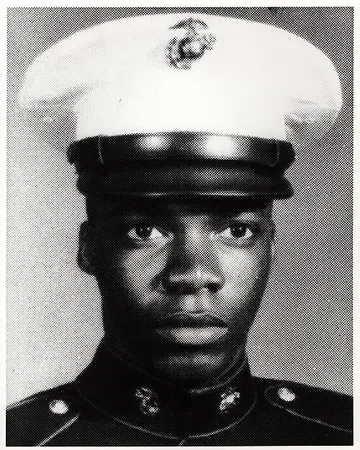
Equivalent ranks in other services
| Insignia | Branch | Rank |
|---|---|---|
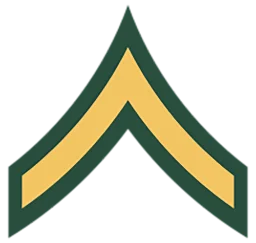 | Army | Private (PV2) |
 | Navy | Seaman Apprentice (SA) |
 | Air Force | Airman (Amn) |
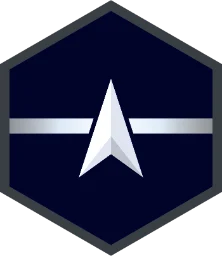 | Space Force | Specialist 2 (Spc2) |
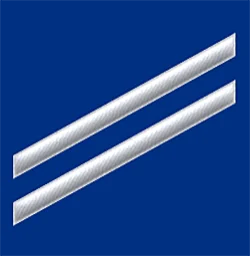 | Coast Guard | Seaman Apprentice (SA) |