
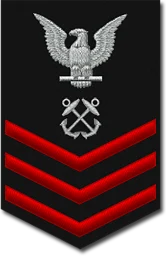
What a petty officer first class does
- Serves as workcenter supervisor or leading petty officer (LPO) of a division
- Plans and tracks maintenance, training and qualifications for the division
- Stands senior enlisted watches, for example engineering officer of the watch or in-port duty section leader
- Acts for the chief when the chief is away and briefs officers on the division's readiness
- Runs the First Class Petty Officer Association's mentoring and command events
How to become a petty officer first class
Advancement from E-5 to E-6 follows the same exam-based system as E-5: 36 months in rate, a commanding officer's recommendation, the rating exam and a final multiple score ranked against vacancies. Billet Based Advancement and the Meritorious Advancement Program also lead to E-6 in eligible ratings. From E-6 the path changes: after another 36 months in rate a First Class takes the E-7 exam, and those who score high enough become selection-board eligible for chief.
Petty Officer First Class pay
In 2026, basic pay for E-6 runs from $3,401 – $5,268 a month, rising with years of service. Basic pay is the same in every branch; housing (BAH) and food (BAS) allowances are paid on top. See the full 2026 military pay chart.
History of the rank
First Class petty officer was created in 1885 as the top of the new three-class structure. When the chief petty officer rate was established on 1 April 1893, First Class became the grade just beneath it.
The First Class badge carries three chevrons under the eagle and specialty mark. A chief's badge adds an arc, or "rocker," over the chevrons.
Because chiefs are chosen from First Class petty officers, Navy records and selection boards have treated sustained leadership at E-6 as the main test of readiness for the chiefs' mess.
Medal of Honor recipients who held this rank
Sailors who earned the nation’s highest award for valor while serving as a petty officer first class.
World War II · 1941
Robert R. Scott
Machinist's Mate First Class · Posthumous
At Pearl Harbor, a torpedo flooded the compartment aboard USS California where Scott manned the air compressor that fed the ship's guns. The rest of the crew left, but Scott stayed at his station to keep air going to the guns for as long as they were firing. He died there.
World War II · 1945
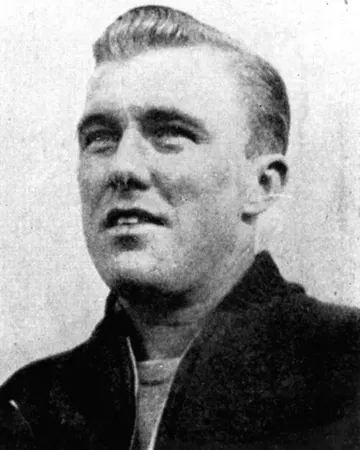
John H. Willis
Pharmacist's Mate First Class · Posthumous
Willis was a platoon corpsman with the 3d Battalion, 27th Marines on Iwo Jima. Wounded and sent to the aid station, he returned to the front without being released and crawled into a shell hole to give a wounded Marine plasma during a counterattack. He threw back eight enemy grenades before a ninth exploded in his hand and killed him.
World War II · 1945
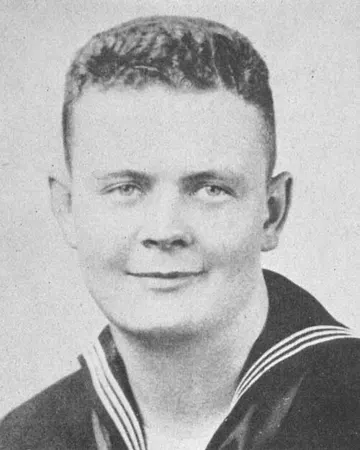
Francis J. Pierce
Pharmacist's Mate First Class
Pierce was a corpsman with the 2d Battalion, 24th Marines on Iwo Jima. When a stretcher party was cut down by fire, he took charge, drew the enemy's fire in the open, killed a shooter in a cave, and carried two wounded Marines back across 200 feet of fire-swept ground. The next morning he led a patrol to the sniper position and was seriously wounded while treating another Marine.
Vietnam War · 1966
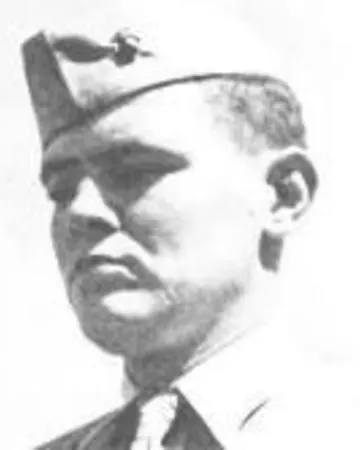
James E. Williams
Boatswain's Mate First Class
Williams was boat captain and patrol officer of River Patrol Boat 105 on the Mekong when his two-boat patrol ran into a much larger enemy force of junks and sampans. Over a three-hour fight he exposed himself again and again to direct fire, pressed the attack, and after dark turned on his searchlights to keep going. The patrol destroyed or captured 65 enemy boats.
Equivalent ranks in other services
| Insignia | Branch | Rank |
|---|---|---|
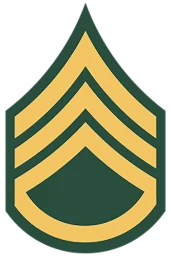 | Army | Staff Sergeant (SSG) |
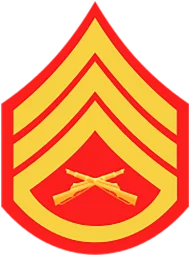 | Marine Corps | Staff Sergeant (SSgt) |
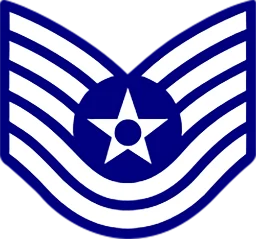 | Air Force | Technical Sergeant (TSgt) |
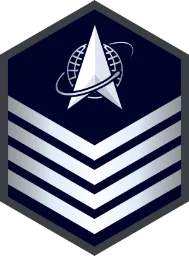 | Space Force | Technical Sergeant (TSgt) |
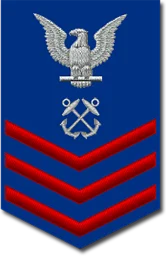 | Coast Guard | Petty Officer First Class (PO1) |