
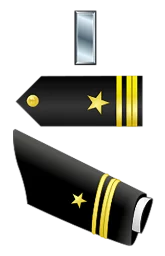
What a lieutenant (junior grade) does
- Serves as division officer with larger or more complex responsibilities
- Qualifies as officer of the deck, engineering officer of the watch or aircraft commander
- Earns a warfare specialty pin: surface warfare, submarine or naval aviator
- Acts as assistant department head on some ships
- Supervises and evaluates enlisted Sailors and junior ensigns
How to become a lieutenant (junior grade)
An LTJG is eligible for promotion to Lieutenant after at least two years at O-2, roughly four years after commissioning. Promotion to O-3 is nearly certain for officers who are fully qualified: Defense Department guidance expects at least 95 percent of them to be promoted. The real test at this stage is earning a warfare qualification on time, since officers who fail to qualify can be moved out of their community.
Lieutenant (junior grade) pay
In 2026, basic pay for O-2 runs from $4,782 – $6,618 a month, rising with years of service. Basic pay is the same in every branch; housing (BAH) and food (BAS) allowances are paid on top. See the full 2026 military pay chart.
History of the rank
The grade was earlier titled "master." On 3 March 1883 it was renamed lieutenant (junior grade), keeping the same place between ensign and lieutenant.
The insignia is one silver bar on the collar and one half-inch stripe plus one quarter-inch stripe on the sleeves and shoulder boards.
For most officers, the LTJG years are when they pin on a warfare device, such as the surface warfare officer pin or naval aviator wings, the mark that they are qualified in their community.
Medal of Honor recipients who held this rank
Sailors who earned the nation’s highest award for valor while serving as a lieutenant (junior grade).
World War II · 1945
Donald A. Gary
Lieutenant (junior grade)
When USS Franklin was torn by explosions off Japan, Gary found several hundred men trapped in a smoke-filled mess compartment. He searched dark, wrecked passageways until he found a way out, then went back three times to lead them all to safety. He also led firefighting parties and got steam up in a boiler to help save the ship.
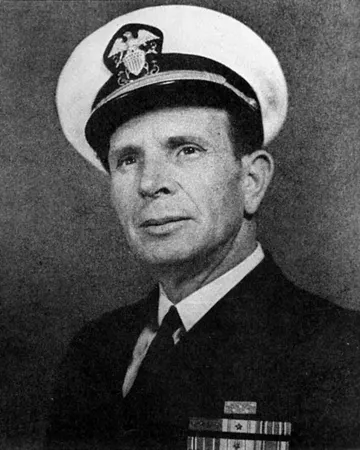
Korean War · 1950
Thomas J. Hudner Jr.
Lieutenant (junior grade)
Near the Chosin Reservoir, Hudner's squadron mate, Ensign Jesse Brown, was shot down and trapped alive in his burning plane behind enemy lines. Hudner deliberately crash-landed his own aircraft beside him, packed snow against the fuselage to hold back the flames, and called for a rescue helicopter. He stayed and fought the cold and fire until there was no hope left.
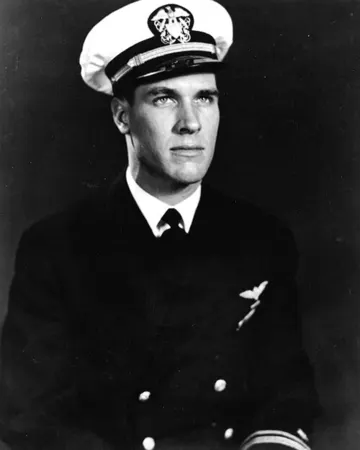
Vietnam War · 1968
Clyde E. Lassen
Lieutenant (junior grade)
Lassen flew a rescue helicopter into North Vietnam at night to pick up two downed aviators on a steep, wooded hill. After hitting a tree when the flares ran out and failing on two more attempts, he went in again and turned on his own landing lights, giving away his position, so the men could reach him. He landed on USS Jouett with about five minutes of fuel left.
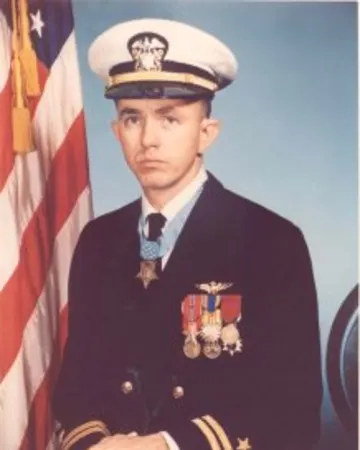
Vietnam War · 1969
Joseph R. Kerrey
Lieutenant (junior grade)
Kerrey led a SEAL team up a 350-foot cliff to reach an enemy camp on an island in Nha Trang Bay. As they came down on the camp, a grenade exploded at his feet and badly wounded him. He kept directing both elements of his team, caught the enemy in a crossfire, and ran the extraction until he was evacuated.

Equivalent ranks in other services
| Insignia | Branch | Rank |
|---|---|---|
 | Army | First Lieutenant (1LT) |
 | Marine Corps | First Lieutenant (1stLt) |
 | Air Force | First Lieutenant (1st Lt) |
| Space Force | First Lieutenant (1st Lt) |
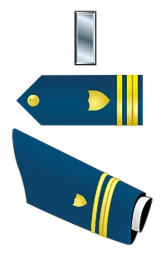 | Coast Guard | Lieutenant (junior grade) (LTJG) |