
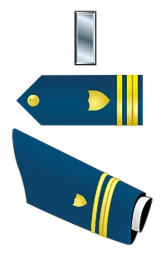
What a lieutenant (junior grade) does
- Serves as officer of the deck or senior deck watch officer on a cutter
- Leads a division or department aboard a small or medium cutter
- Commands some patrol boats
- Serves as boarding officer, response officer or investigator at a sector
- Flies as a copilot in Coast Guard aircraft
How to become a lieutenant (junior grade)
Promotion from LTJG to Lieutenant is handled under Title 14 and Coast Guard promotion policy for officers found fully qualified. Unlike promotion to O-4 and above, it does not require Senate confirmation.
Lieutenant (junior grade) pay
In 2026, basic pay for O-2 runs from $4,782 – $6,618 a month, rising with years of service. Basic pay is the same in every branch; housing (BAH) and food (BAS) allowances are paid on top. See the full 2026 military pay chart.
History of the rank
The rank of lieutenant (junior grade) came to the Coast Guard with the Navy officer titles adopted in 1920. In the Navy, the title replaced the older rank of master on 3 March 1883.
The insignia is one silver bar on the collar and one half-inch stripe with a quarter-inch stripe above it on the sleeves and shoulder boards, under the Coast Guard shield.
Command of patrol boats by junior officers gives young Coast Guard officers a chance at command early in their careers.
Equivalent ranks in other services
| Insignia | Branch | Rank |
|---|---|---|
 | Army | First Lieutenant (1LT) |
 | Marine Corps | First Lieutenant (1stLt) |
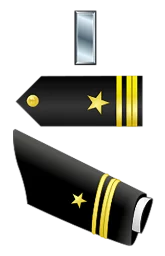 | Navy | Lieutenant (junior grade) (LTJG) |
 | Air Force | First Lieutenant (1st Lt) |
| Space Force | First Lieutenant (1st Lt) |