
What a private does
- Trainee in Basic Combat Training and then Advanced Individual Training for an assigned MOS
- Learns drill, marksmanship, first aid, land navigation and Army values
- Carries out tasks assigned by team leaders and drill sergeants
- Meets the Army fitness and body composition standards
- Joins a first unit as a junior member of a team or section
How to become a private
Most enlistees enter the Army as a PVT. Some start higher under enlistment options set out in AR 601-210, such as college credit or a degree or a civilian skill the Army needs, so not every recruit ever wears this grade. There is no promotion to PVT; it is the starting point. From here, advancement to Private (PV2) is automatic once the Soldier has served six months and the commander has no reason to hold it back.
Private pay
In 2026, basic pay for E-1 runs from $2,407 – $2,407 a month, rising with years of service. Basic pay is the same in every branch; housing (BAH) and food (BAS) allowances are paid on top. See the full 2026 military pay chart.
History of the rank
Privates have been the bulk of the Army since 1775, when Continental regiments were built mostly of privates led by sergeants and corporals. For most of Army history the private wore no grade insignia at all, and that is still true of the E-1 today.
When the Army reworked its enlisted insignia on 28 May 1968, the single chevron that had belonged to the private first class was moved down to the Private E-2. That left the E-1 as the one enlisted grade with a bare sleeve and collar.
Medal of Honor recipients who held this rank
Soldiers who earned the nation’s highest award for valor while serving as a private.
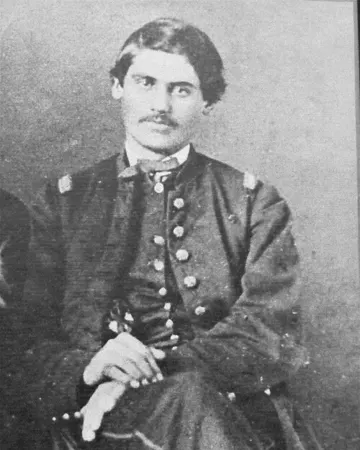
Civil War · 1862
Jacob Parrott
Private
Parrott, of the 33d Ohio Infantry, was one of the volunteers who went nearly 200 miles into Confederate territory and seized a train at Big Shanty, Georgia, to wreck the rail line between Chattanooga and Atlanta.
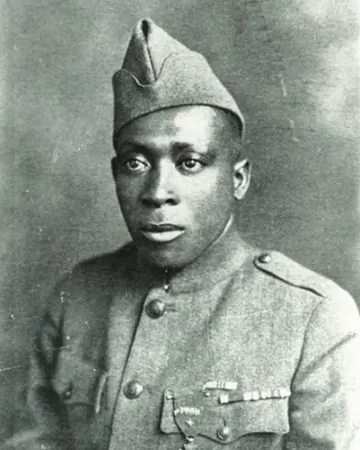
World War I · 1918
Henry Johnson
Private · Posthumous
Johnson, of the 369th Infantry Regiment, was on sentry duty at a forward outpost in France when the enemy attacked. When a badly wounded fellow soldier was being carried off, Johnson, gravely wounded himself, fought the two captors hand to hand with only a knife and rescued him, then kept holding back the larger enemy force.
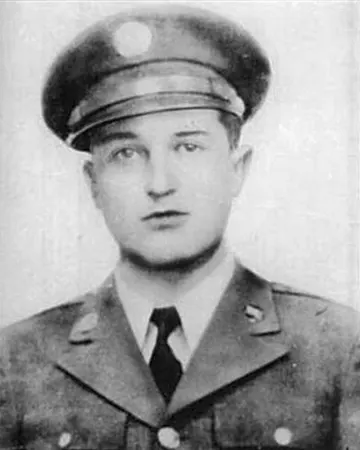
World War II · 1943
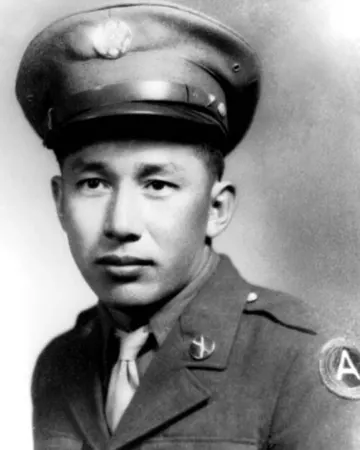
Joe P. Martinez
Private · Posthumous
On Attu in the Aleutian Islands, an attack on a snow-covered mountain position had stalled under heavy fire. Martinez, an automatic rifleman, stood up and pushed forward, urging others to follow, and cleared enemy positions with his rifle and grenades as he climbed. He was mortally wounded near the top after leading the advance through the pass.
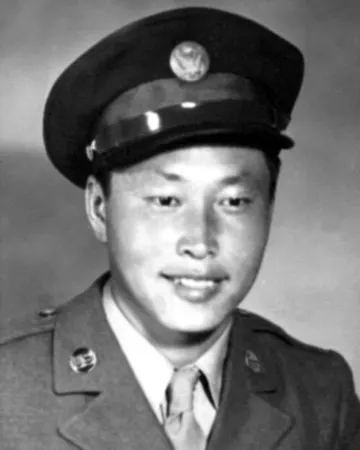
World War II · 1944
George T. Sakato
Private
Near Biffontaine, France, Sakato charged an enemy strongpoint and inspired his platoon to follow. When his squad leader was killed during a counterattack, he took charge of the squad and helped stop the enemy, using a captured rifle and pistol. In the action he killed 12 enemy soldiers and took four prisoners.
World War II · 1944
Barney F. Hajiro
Private
Over three actions near Bruyeres and Biffontaine, France, in October 1944, Hajiro exposed himself to enemy fire to support attacking troops and, with one comrade, ambushed an enemy patrol. On 29 October he started an attack up a heavily defended slope and knocked out two machine-gun nests.
Equivalent ranks in other services
| Insignia | Branch | Rank |
|---|---|---|
| Marine Corps | Private (Pvt) | |
| Navy | Seaman Recruit (SR) | |
| Air Force | Airman Basic (AB) | |
| Space Force | Specialist 1 (Spc1) | |
| Coast Guard | Seaman Recruit (SR) |