
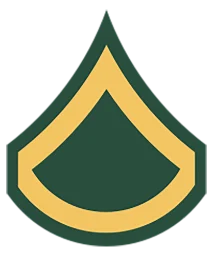
What a private first class does
- Rifleman, crew member or MOS specialist on a team
- Trains newer privates in routine tasks
- May act as a team leader for short periods when NCOs are absent
- Keeps individual and team equipment ready
- Works toward Specialist and early leader development courses
How to become a private first class
Promotion to PFC is decentralized, approved at unit level. The baseline is 12 months time in service and 4 months time in grade as a PV2. Commanders may advance a strong Soldier on a waiver at 6 months TIS and 2 months TIG, within the unit's waiver allowance.
Private First Class pay
In 2026, basic pay for E-3 runs from $2,837 – $3,198 a month, rising with years of service. Basic pay is the same in every branch; housing (BAH) and food (BAS) allowances are paid on top. See the full 2026 military pay chart.
History of the rank
The Army created a 'private (first class)' title in 1866. Until 1919 a PFC wore only the branch insignia; on 22 July 1919 the Secretary of War approved a single arc for the grade.
In the 1920 reorganization into numbered pay grades, the PFC became the sixth grade and wore one chevron. That lasted until 28 May 1968, when the single chevron passed to the PV2 and the PFC received the current chevron above a rocker.
Medal of Honor recipients who held this rank
Soldiers who earned the nation’s highest award for valor while serving as a private first class.
World War II · 1945
Desmond T. Doss
Private First Class
Doss, a company medic who would not carry a weapon, stayed on top of a 400-foot escarpment on Okinawa after heavy fire drove his battalion back. He carried the wounded one by one to the edge and lowered them down the cliff on a rope litter. Weeks later, badly wounded himself, he gave up his place on a stretcher to a more seriously hurt man.
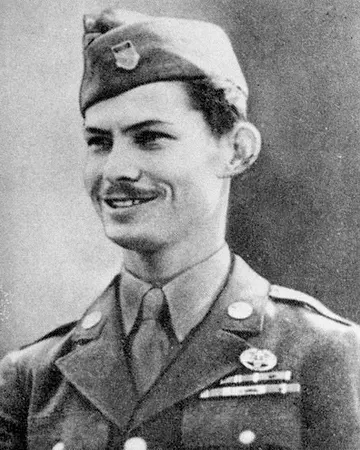
World War II · 1945
Sadao S. Munemori
Private First Class · Posthumous
Near Seravezza, Italy, Munemori took over his squad when its leader was wounded and knocked out two machine guns with grenades in one-man attacks. As he returned to a shell crater sheltering two of his men, an enemy grenade landed there, and he threw himself on it, saving both soldiers.
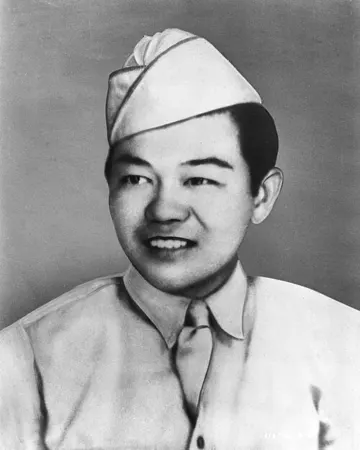
Korean War · 1951
Herbert K. Pililaau
Private First Class · Posthumous
On Heartbreak Ridge his platoon ran low on ammunition and was ordered to pull back. Pililaau volunteered to stay and cover the withdrawal, firing until his ammunition was gone, then throwing grenades and finally fighting hand to hand until he was killed.
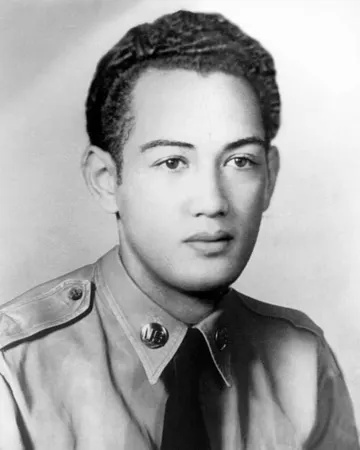
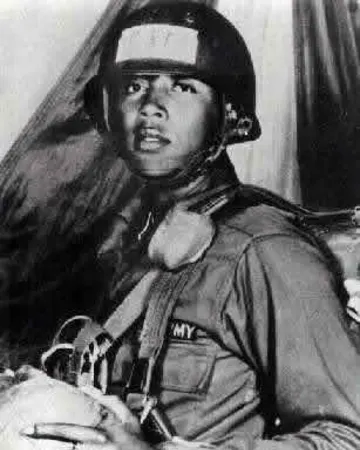
Vietnam War · 1965
Milton L. Olive III
Private First Class · Posthumous
Olive was moving through the jungle with four other soldiers while chasing Viet Cong fighters when a grenade landed among them. He grabbed it and fell on it, taking the blast and saving the lives of the men around him.
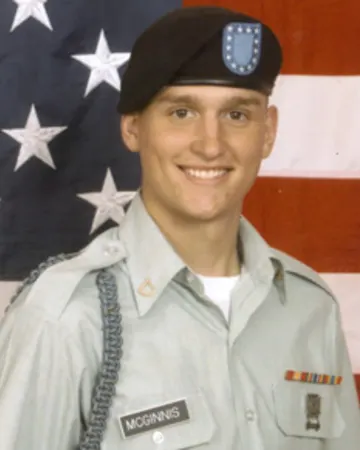
Operation Iraqi Freedom · 2006
Ross A. McGinnis
Private First Class · Posthumous
McGinnis was the .50-caliber gunner in a Humvee on patrol in Baghdad when an insurgent threw a grenade through the gunner's hatch. He shouted a warning, then dropped into the vehicle and covered the grenade with his body, saving the four other soldiers inside.
Equivalent ranks in other services
| Insignia | Branch | Rank |
|---|---|---|
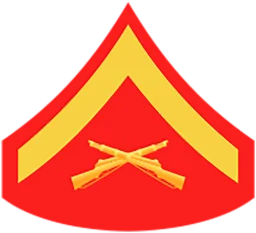 | Marine Corps | Lance Corporal (LCpl) |
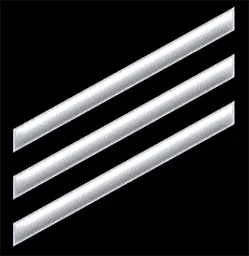 | Navy | Seaman (SN) |
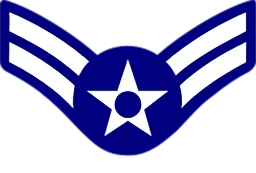 | Air Force | Airman First Class (A1C) |
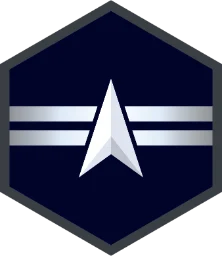 | Space Force | Specialist 3 (Spc3) |
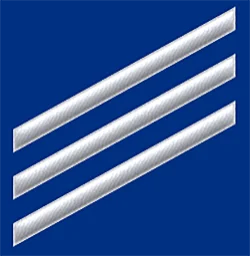 | Coast Guard | Seaman (SN) |